Top Side – Getting Ready to Find the Littlest Fossils – #NTCave2017

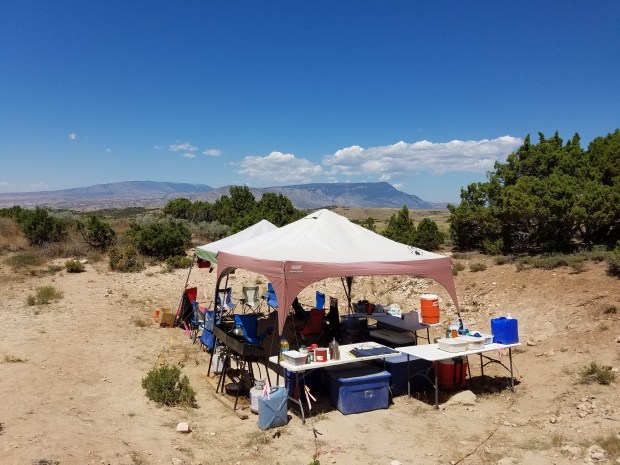
Today, I spent my time on the surface. I did a little cleaning while everyone else was in the cave.

Clean camp is clean.

Then I got things ready for screenwashing, a process by which we rinse dirt away from tiny rocks and fossils in sediments.

Ready for screen washing.

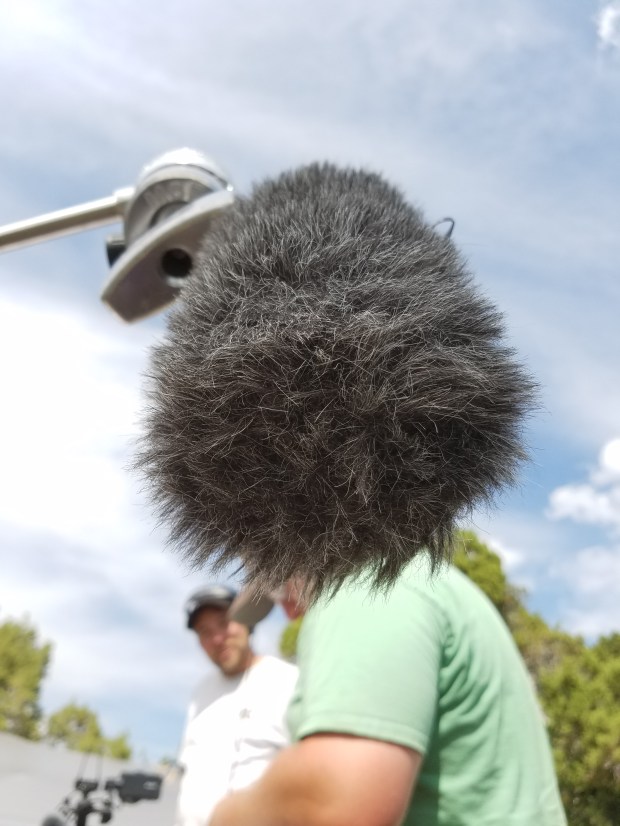
We had some journalists present, who are working on a documentary for PBS.

Dramatic action shot!

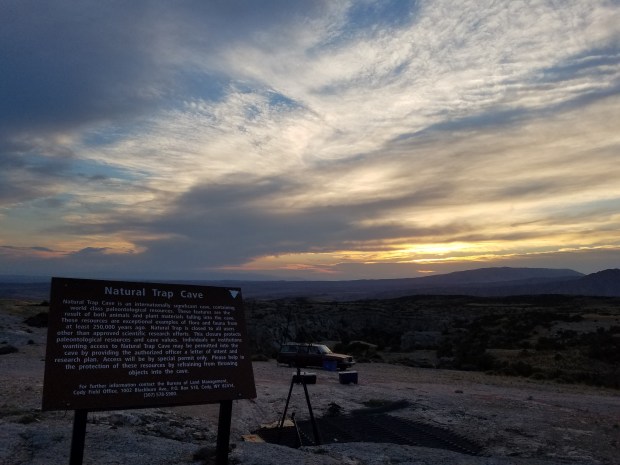
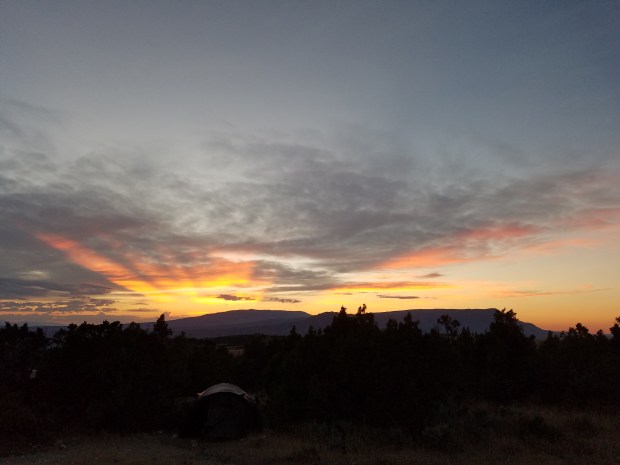
The day ended like all days at Natural Trap Cave… With a beautiful sunset.
Sunset over my wee abode.

I think I’ll be topside again tomorrow so watch out for pictures of tiny fossils!

A full day – Day 2 at Natural Trap Cave – #NTCave2017

Today was a normal day off work in the cave. Normal by cave standards, anyway.

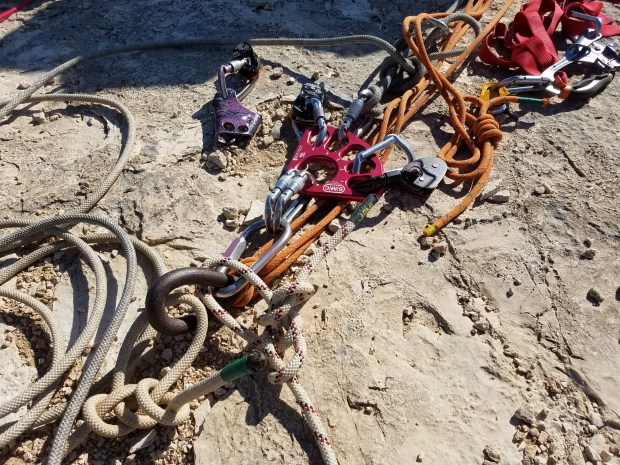
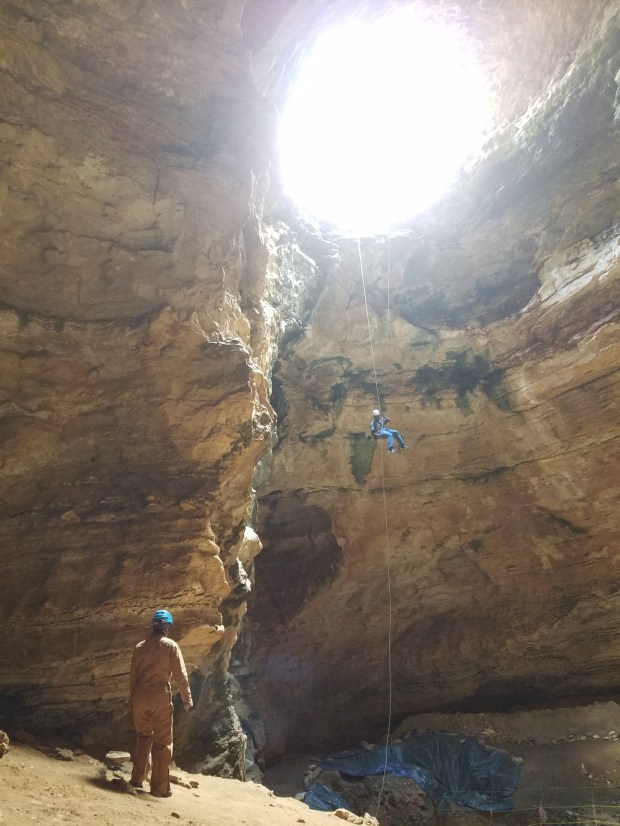
First, was the usual rappel into the cave.

One anchor, upon which all our lives depend.

I made it, no problem, as always.

Always grinning.

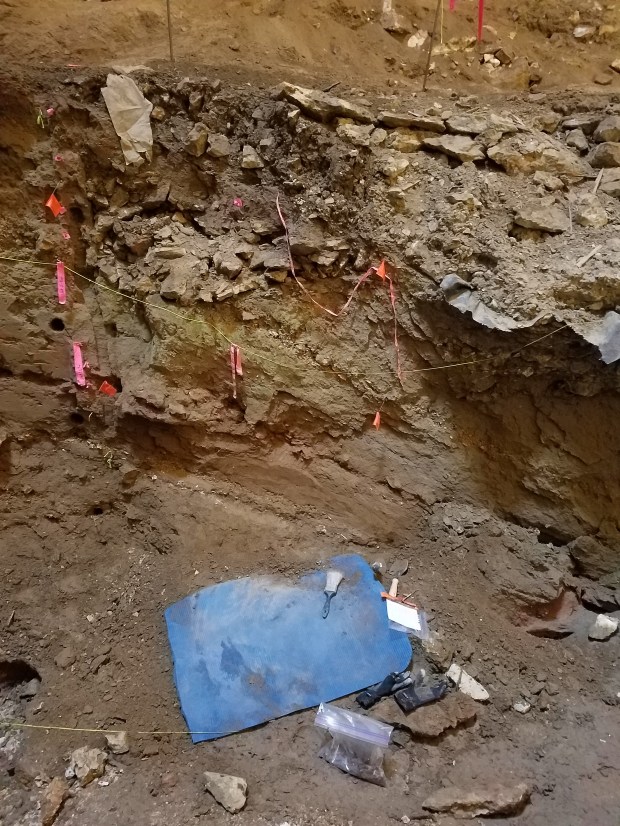
I spent my day collecting a sample of a thin, charcoal-rich bed for carbon dating. It was tedious.

My desk for the day. (Sideways again)

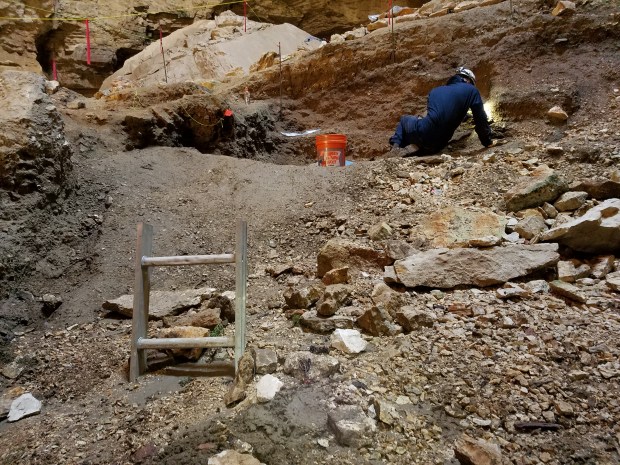
But I did enjoy some relics from expeditions past.

Ladder to nowhere.

Tomorrow, I’m working on the surface. Lots of work to do there, too!

In we go – Day 1 – #NTCave2017

We made it in for the first day. Today was clean up and making a plan for the short field season. This will be my office for the next week and a half.

(Pic forthcoming. It won’t upload.)

First we got some training.

Learning the ropes, literally.

Then it was time.

Under enthused. (Yes, it’s sideways. I’ll fix it, eventually)

Descent was quick and painless…

Rappelling in. (Yes, it’s sideways. I’ll fix it, eventually)

For people, at least.

Baby packrat mortibus est.
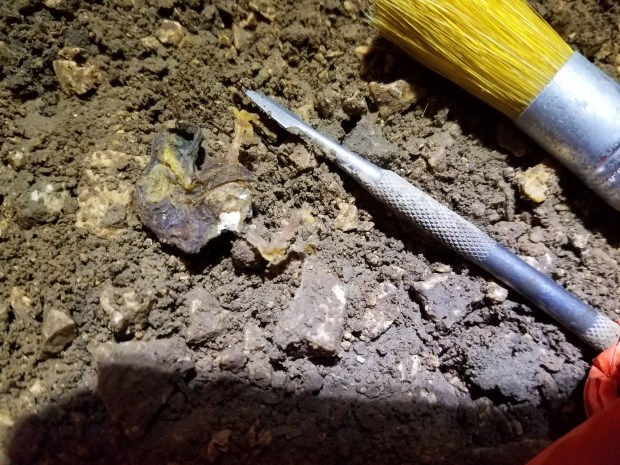
Mummified bluebird chick.
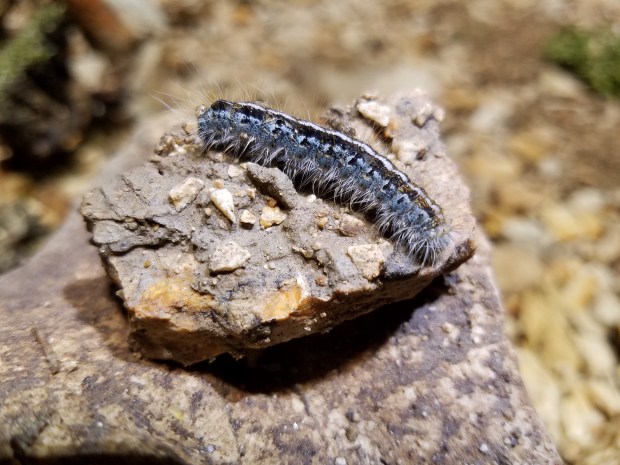
Random, sadly deceased, caterpillar.

But not all that’s in the cave is dead.

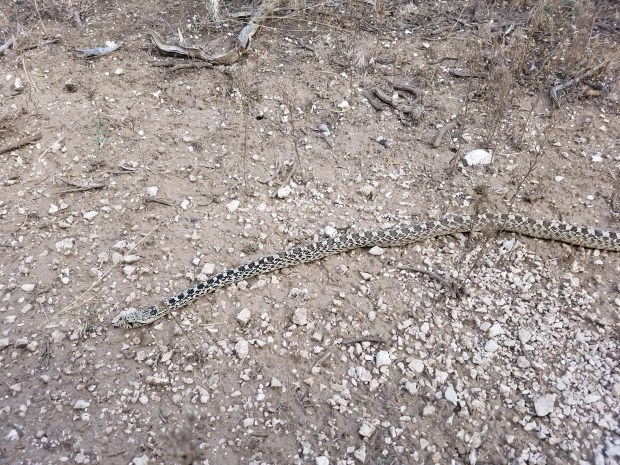
Life finds a way.

Now everything is all cleaned up and the real work can begin. Stay tuned!

Tracks in the dust. (And sideways again.)

Reading, Reading, Science Reading – #365 papers – June 2017

It’s a little difficult to keep up with individual blog posts for every paper I read for #365papers, for for the next three months you can expect one summary post per month, just like this one…

#365papers for June 2017Continue reading “Reading, Reading, Science Reading – #365 papers – June 2017”

Does Anyone Really Know How Many Kinds of Birds There Are? – #365papers – 2017 – 151

#365papers for May 31, 2017

Barrowclough, Cracraft, Klicka, and Zink, 2016, How many kinds of birds are there and why does it matter?: PlosONE, v. 11, e0166307.

What’s it about?

When discussing species diversity, especially in terms of conservation efforts, it’s important to have a good definition of ‘species.’ Here, the authors show that depending on how you define a species, there may be twice as many kinds of birds as we usually think.Continue reading “Does Anyone Really Know How Many Kinds of Birds There Are? – #365papers – 2017 – 151”

How Aluminum in Zircon Can Tell Us What Happened Billions of Years Ago – #365papers – 2017 – 150

#365papers for May 30, 2017

Trail, Tailby, Wang, Harrison, and Boehnke, 2017, Aluminum in zircon as evidence for peraluminous and metaluminous melts from the Hadean to present: Geochemistry, Geophysics, Geosystems, v. 18, p. 1580-1593.

What’s it about?

Zircon is a mineral that forms in igneous rocks. As the rocks erode away, the zircons often survive and can be mixed into younger rocks, including new igneous rocks. Here, the authors use the concentration of aluminum in the zircons to determine the type of igneous rock the zircon originally formed in.Continue reading “How Aluminum in Zircon Can Tell Us What Happened Billions of Years Ago – #365papers – 2017 – 150”

The Magnetic Field and Aurorae of Jupiter – #365papers – 2017 – 149

#365papers for May 28, 2017

Connerney and 21 others, 2017, Jupiter’s magnetosphere and aurorae observed by the Juno spacecraft during its first polar orbits: Science, v.356, p. 826-832.

What’s it about?

With the instrumentation on the Juno spacecraft, scientists can now measure the strength and shape of the magnetic field around Jupiter and explore the planet’s aurorae (like our Aurora Borealis).Continue reading “The Magnetic Field and Aurorae of Jupiter – #365papers – 2017 – 149”

Peeking Under Jupiter’s Clouds – #365papers – 2017 – 148

#365papers for May 28, 2017

Bolton and 42 others, 2017, Jupiter’s interior and deep atmosphere: The initial pole-to-pole passes with the Juno spacecraft: Science, v. 356, p. 821-825.

What’s it about?

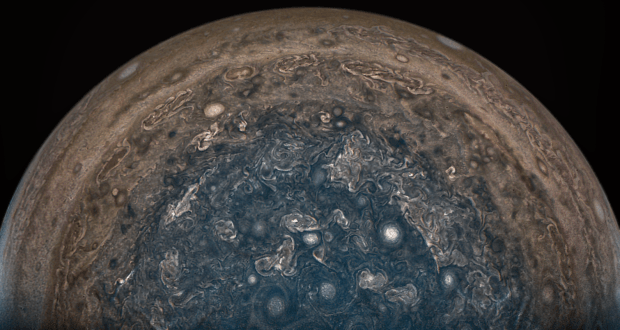
We finally have a spacecraft close enough to Jupiter that we can take photos of the planet’s poles and better understand what is happening below the cloud tops.

Jupiter’s south pole. Credits: NASA/JPL-Caltech/SwRI/MSSS/John Landino

Continue reading “Peeking Under Jupiter’s Clouds – #365papers – 2017 – 148”