Z is for Zionodon
 Zionodon is an adorable little insectivorous mammal related to modern elephant shrews. You may squee now.
Here’s a skeleton of a close fossil relative, Macrocranion tupaiodon:

Credit Ghedoghedo CC 3.0 By-SA
Penny Higgins - Storyteller • Artist • Scientist
Combining Science and Joyful Creativity
Z is for Zionodon
Zionodon is an adorable little insectivorous mammal related to modern elephant shrews. You may squee now.
Here’s a skeleton of a close fossil relative, Macrocranion tupaiodon:
#365papers for April 29, 2017
What’s it about?
Here is a nice description of all the mammalian species found from early Eocene rocks in Fossil Butte National Monument. Not only is there a list of fossil species, but they’re also put in chronological order, so that changes over time can be discussed.Continue reading “How Old Is the Wasatch Formation at Fossil Butte? – #365papers – 2017 – 119”
Y is for Yerbua
 Yerbua is a genus of hopping rodent. The name “Yerbua” was coined in 1778, but has since been replaced with “Pedetes.” I have this name written down as a Uintan mammal, but Pedetes is a modern taxon from Africa, so I’m not sure what happened. But here you go:
_(6042009463).jpg)
#365papers for April 28, 2017
What’s it about?
Homo floresiensis is a species of the genus Homo that was discovered and descibed over 10 years ago. It is a species of small stature from the island of Flores. Many have argued about its placement with other members of the genus Homo and why it might have been so small.
The authors here show that H. floresiensis is at best a sister to H. habilis and may represent an even more ancient lineage of the genus. It probably represents an early migration of homonins out of Africa.Continue reading “Homo floresiensis didn’t come from H. erectus – #365papers – 2017 – 118”
X is for Xylotitan
Xylotitan is a new species of brotothere, a hoofed mammal related to horses and rhinos. Brototheres were giant mammals, considered the earliest of the ‘megaherbivores.’
 Among brototheres, Xylotitan is among the smallest, only about the size of a large tapir.
This new species was named in 2016 by Mihlbachler and Samuels.
#365papers for April 27, 2017
What’s it about?
This paper is the description of a juvenile turtle attributed to the species Manchurochelys manchoukuoensis. The authors compare this new specimen with several other species of turtle from the Jehol Biota and other faunas of similar age to argue that 1) it is a juvenile and 2) that their species attribution is correct.Continue reading “An Early Cretaceous Baby Turtle! – #365papers – 2017 – 117”
W is for Washakius
 Washakius is a primate known only from the Eocene of the United States.

V is for Viverravus
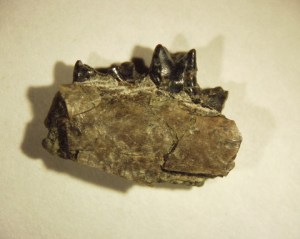
 Viverravus is a carnivorous mammal. Interestingly, I have written up Viverravus in an earlier A to Z Challenge about Paleocene mammals, here. Viverravus as a genus lasted many millions of years.
Here is an early Eocene Viverravus from the Yale-Peabody Museum:
U is for Uintatherium
 Uintatherium was a massive hoofed mammal that lived during the Eocene epoch. Superficially, they were rather rhinoceros-like, though they were not related.

Notably, Uintatheres had many horns and protuberances on their skulls, in addition to robust tusks.

T is for Tapocyon
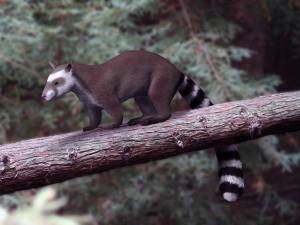
 Tapocyon is a genus of miacid carnivores that lived during the Paleocene and Eocene epochs of North America. It was a climbing mammal that likely spent a great amount of time in trees.

 Penny Higgins - Storyteller • Artist • Scientist