Studying mammal teeth is an interesting process. Mammals are unique in that many species can be identified by the shape of the teeth alone. This is because mammal teeth are very complex, and highly adapted for processing food without the need to be replaced regularly. Most mammals have one or two sets of teeth, so these teeth must come together very precisely to work well, and must also survive a lifetime of wear.
With the exception of the egg-laying mammals (platypus and the spiny anteater), all modern mammals share a common basic plan for teeth. This is called the tribosphenic molar. The main part of the tribosphenic molar is a triangle of cusps (called the protocone, metacone, and paracone in the upper molar and protoconid, metaconid, and paraconid in the lower molar) which slide past one another during chewing to make a scissor-like shearing surface.

A fourth cusp, the hypocone, hypoconid, helps make this shearing surface bigger and provides a mortar-and-pestle-like crushing surface as well.

Mammal molars also have lots of other structures, like cingulum/cingulids, crista/cristids, conules/conulids (the -id suffix is indicative of structures on the lower molars). The shape, positions, and presence or absence of these features are used to distinguish one species from another. Sometimes the differences are subtle. Sometimes the distinguishing characteristics are present in only one of the three molars that are present in each side of the jaw, so knowing which molar you’re looking at can be important.
Modern placental mammals (not marsupials or egg-laying mammals) primitively have three incisors, one canine, four premolars, and three molars in each quadrant of the jaw (upper right, lower left, etc.) From here, teeth may be lost during evolution. For example, humans have two incisors, one canine, two premolars, and three molars per quadrant. When labeling photographs, we use R and L to indicate teeth from the right or left side of the mouth. I,C,P, and M are abbreviations for incisor, canine, premolar, and molar, respectively. Upper case letters are for teeth from the upper jaw; lower case letters are for teeth from the lower jaw. Thus, RM1 means the right upper first molar. Li2 is the left second lower incisor. We use this same method to identify the teeth in the jaws in other mammal groups as well, like marsupials and multituberculates. Such distinctions are not possible in other vertebrate groups, like dinosaurs, as their teeth tend to be numerous and continually replaced.
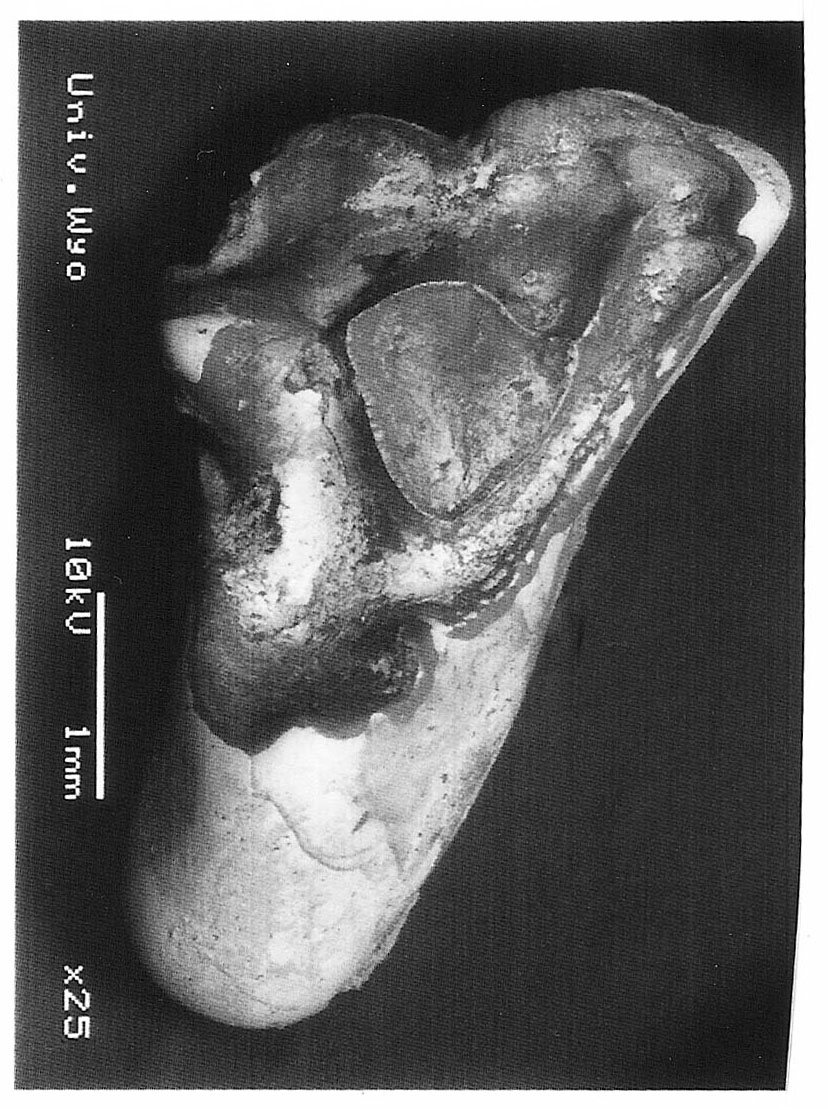
Some typical mammal teeth with these cusps labeled:
Human:

Saber-toothed Tiger (a carnivore):

Gazelle, a grazing herbivore:


 Penny Higgins - Storyteller • Artist • Scientist
Experience and have a glimpse of a pirate’s life in this spectacular ride and see if a pirate’s life is to your taste and calling.
When you’re in a Disneyland Park, you have to look no further.
Brusssels has a well connected public transport system.
LikeLike
Experience and have a glimpse of a pirate’s life in this spectacular ride and see if a pirate’s life is to your taste and calling.
When you’re in a Disneyland Park, you have to look no further.
Brusssels has a well connected public transport system.
LikeLike