One question that is often asked, especially in advertising, is is “what draws the attention of the consumer?” More basically, we sometimes wonder what people are looking at, anywhere. Twenty people can look at the same scene and notice different things about it. What captures a person’s attention?
Such questions are often addressed using a technique called eye-tracking. This involves two cameras, usually worn by the subject. One camera takes a picture of the scene that the person is observing and the other films the motions of the subject’s eye. With careful calibration, it is then possible to project upon the image of the scene, the actual point at which the subject is looking.
Eye-tracking technology has changed over the years. Originally, eye-trackers were cumbersome and seldom left the laboratory. Recently, eye-tracking has become portable, and new questions can be asked and answered. I’ve been fortunate to be associated with (as a participant and as an assistant) a different type of eye-tracking study.
This study goes beyond simply asking what people look at. Instead, the goal is the understand how geologists learn their trade, and the distinction between what a novice geologist (an early-career student) and an expert observer (a professional geologist) notices when looking at an unfamiliar landscape. The study is investigating what’s called “perceptual learning,” and is a joint venture between geologists, brain and cognitive scientists, and imaging technologists at the University of Rochester and Rochester Institute of Technology.
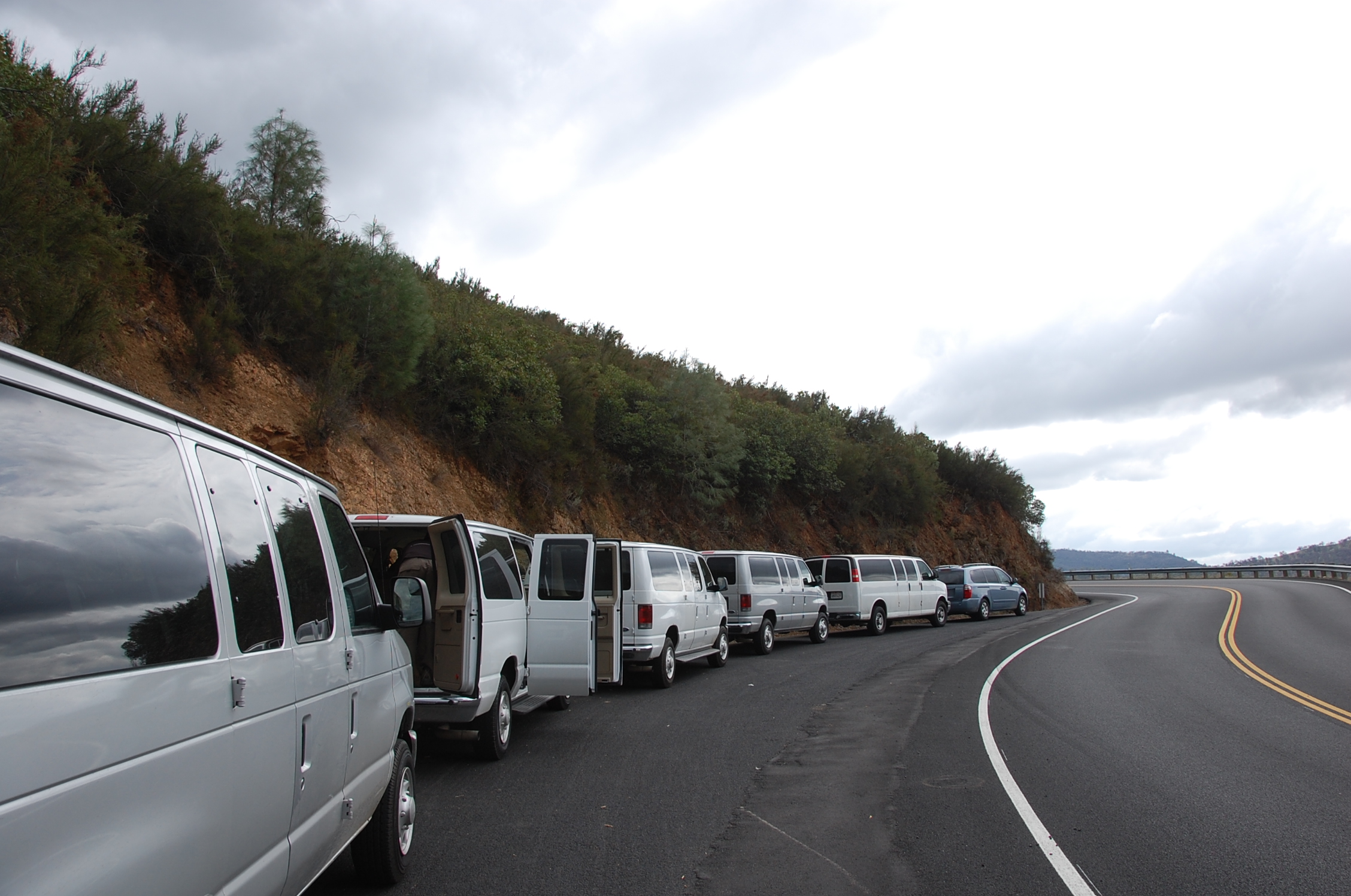
The result is a nine-day Spring Break field trip to California for about 20 students and researchers. In many regards it’s a typical geology field trip involving a caravan of 12-passenger vans stopping regularly at convenient road cuts and scenic overlooks where everyone piles out of the vehicles and the instructor shows the students what is significant about that particular place. Then the students take a bunch of photos and everyone climbs back into the vans and off they go again.

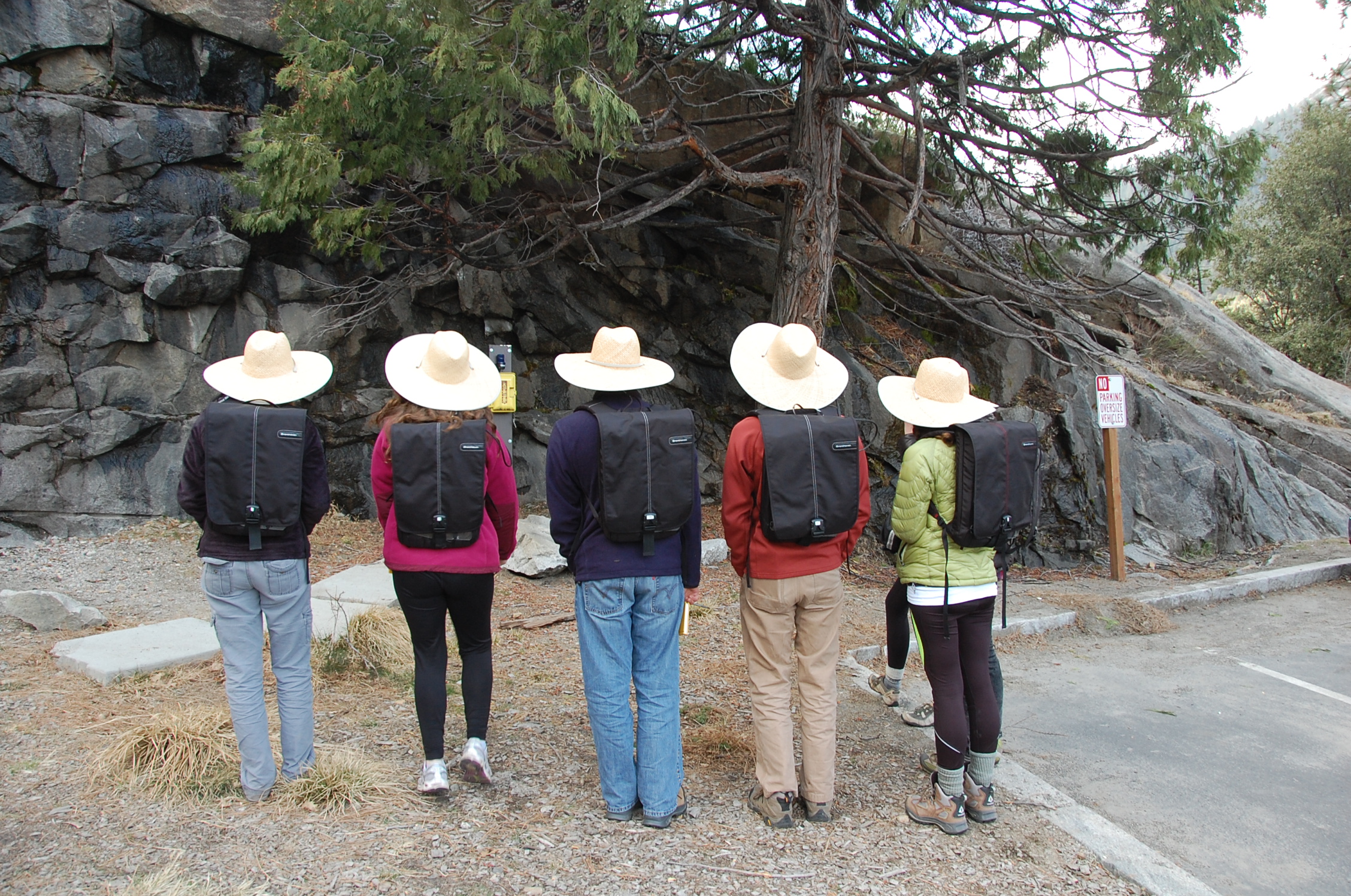
But this trip is different as well. At two to four of each day’s stops, the eye-trackers come out. By the end of the trip, it takes about 15 minutes to suit up. All the students mill around, intentionally ignoring the scenery around them, waiting for the go-ahead to finally look around. Sometimes, they’re forced to face a wall, waiting for everything to be in order. When all is ready, the students are led to a spot, lined up, and asked to observe the scene looking for evidence of geologic events, specified by the instructor. They look around for a minute or two, then the stop becomes like any other: Question and answer, followed by a detailed explanation offered by the trip leader. Then the students take their photos, the eye-trackers come off, and the caravan moves on.



This eye-tracking, geology-spotting venture has been going on for three years now. I myself have been on two of the trips, once as an “expert,” and once as a driver/wrangler. As yet, no major publications have come from the work. It seems that the study has generated so much data, that new methods had to be developed to deal with the data. But conclusions are beginning to arise. For example, we’ve learned that it matters how the question is asked, as to whether or not the students begin looking in the right places. There’s a difference, you see, between “look in the valley” and “look around the valley.” Who knew.
For me, I just think it’s damn cool!
For more photos of the shenanigans that is the California field trip, visit my Flickr sets for 2010 and 2012.

 Penny Higgins - Storyteller • Artist • Scientist